
Alone with My Thoughts – 4/24/26

Scrapping off an inch of snow on April 19th can be disturbing with winter dragging into spring. But for stock market investors, there is an adage that winters are often short while summers can last some time. Similar to last year’s “tariff tantrum” which dramatically dragged stocks down almost 20% but then rebounded to finish the year at record highs, our recent market “weather event” has now been reversed and in the matter of 12 days, we are now back to record highs for the S&P. This is a nod to building resilient portfolios and to remaining committed to your long-term plan, using the inevitable dust-ups to position for the summer months ahead.
Alone with My Thoughts – 4/6/26

While Wall Street enjoyed the long Easter weekend, the Fed job report was released on Good Friday. In a surprise, non-farm payrolls increased 178,000, well above the expected gain of 65,000, which could be seen as a positive for the economy. Unfortunately, the job gains were again concentrated in certain areas, notably the health care sector, led by 31,000 returning workers after the Kaiser Pemanente strike was resolved. According to economic sources, the health care sector has accounted for approximately 70% of all jobs created since 2022. The baby boomer generation has noticeably impacted society and the economy throughout their passage of time and now with the boomers aging (in eight years there could be more 85 year olds than those 18 and less) it comes as no real surprise that healthcare, particularly targeting senior citizens, is in growth mode and has been since outpacing both manufacturing and retail in the early 2000’s. Two take aways, healthcare is strong and vibrant with respect to career opportunities and secondly, the jobs numbers might not be as good as the talking heads may have you believe.
Acclerating Into 2026

The last three years have been quite positive for the US equity markets, as have 6 of the last 7 years (did I really say “6-7”). For Investors, though, we now need to anticipate the direction of our investments going forward and, in many ways, the economy and the markets could be poised for possibly more good news. For the record, the S&P 500 rallied about 17% in 2025 along with international stocks finally catching a bid and popping over 20%. Not to be outdone, the bond market followed suit, with the Vanguard Total Bond Market ETF gaining 7% for the year. On to 2026… We believe that economic growth comes from a combination of savings (money available to invest) and innovation (witness AI). There appears to be plenty of both, with over $90 trillion in US investable assets and a recently announced 4.9% productivity gain, due in part to AI spending and now application. Another factor influencing corporate earnings is the realization of new tax cuts from the OBBBA Act which could act as a “buyback” mechanism as corporations can either reinvest stronger earnings or give these gains to shareholders as dividends. In addition, the current trend for interest rates is lower and even though it receives much headline attention, falling interest rates can be good for stock investors. Finally, potential M&A deals this year, on top of a breakout increase in deals during 2025, might also be a catalyst for economic and asset growth. In fairness, there are plenty of things that could go sideways in the world in which we are living. Geopolitical risk is certainly out in the universe, with potential flare-ups in Asia, the Middle East, etc. a possibility. There is also the risk that for all the hype, the cost and productivity savings stemming from AI fail to materialize, which could cause a major disruption to tech growth and spending which could lead to lower stock prices. Finally, inflation remains very sticky and is causing real financial burdens to the middle class in addition to being a threat to possible higher interest rates down the road. Our goal is to manage portfolios in a manner that continuously addresses risk while simultaneously striving to invest where our money is treated the best. Here’s to another New Year and above all, cheers to healthy and happy years to come.
Alone with My Thoughts – 1/21/26
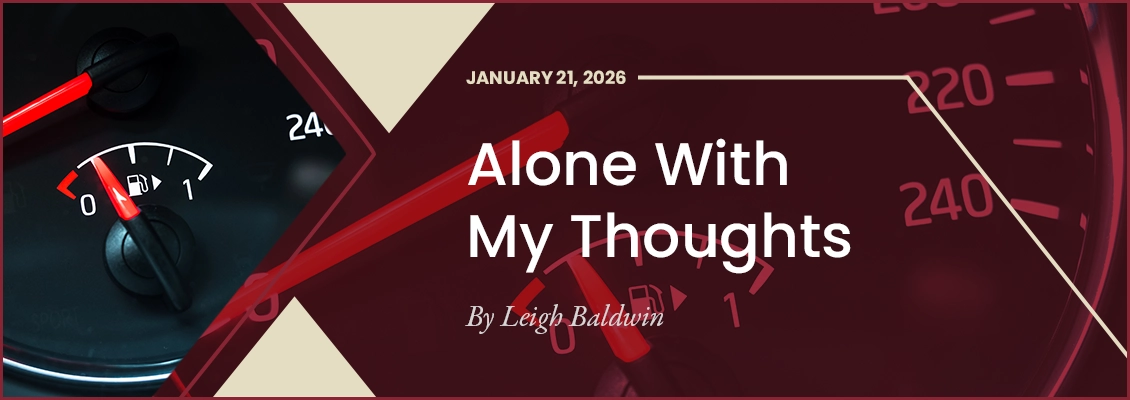
Hats off to James “Jim” Moylan, the Ford engineer that created the “Moylan Arrow” or the arrow on most car dashboards that indicates which side of the car to pull up to at the gas pump. Unfortunately, Jim passed away in December, but his simple, novel, and practical idea in 1989 became a mainstay on cars around the world. It also points to the fact that how innovation, no matter how large (AI) or small (Moylan Arrow), can impact an industry or an entire economy. Further, with respect to direction, sometimes it helps to have someone help us navigate and simplify the financial world of Roths IRA’s, 403B’s, 401K’s, HSA’s et al.
Third Time is a Charm

As we head full steam into the fourth quarter of 2025, we are celebrating the third birthday of the current Bull Market, which began in October of 2022. It has been an impressive rally, with the S&P 500 gaining about 85% over these 36 months. The new highs in the major averages have been a part of our daily conversations recently, which eventually leads to concern as to whether the good times can continue to roll. There is even a persistent question of whether we are in a “bubble” or not. So, what is an investor to think? Here are two cases to consider… Bullish Case. Bulls may point to the fact that the average bull market lasts about 4 1/2 years, giving legs to this rally as momentum is in their favor. The Fed has become accommodative, lowering interest rates twice and leaving an open door for more to come, which is like cat nip to Wall Street investors. Earnings have been solid and better than expected, but with some clouds forming around future projections. The AI build-out is incredibly powerful, combining hundreds of billions of Capex spending with the potential for real productivity gains. Seasonally, the fourth quarter has historically been a positive period for stocks and higher tax refunds could stimulate the economy in the first quarter of 2026. Bearish Case. Stock valuations are getting extended, primarily in the large cap tech arena, whose issues have dominated the overall index returns over the last three years. AI spending, for example MSFT, GOOG, and META alone, are committed to spending $80 billion per quarter on the build-out, needs to be monitored as to whether it is still coming from cash flow or are firms beginning to take on higher levels of corporate debt. And what is the level of cross dealing, as the large tech firms buy and make deals with each other. With respect to interest rates, long-term rates are staying stubbornly higher, and inflation continues to also remain stubbornly higher, with both indicators beginning to really curtail consumer purchasing power. Finally, government shutdowns, aggressive new tariff policies, and political divides are creating a sense of unease for business leaders trying to make investments for the future. Given this backdrop, we continue to recommend that clients and their money managers review and build portfolios that can weather periods of volatility and provide the returns and income expected during each market cycle. While we cannot predict short term swings in the markets, we can focus on these three things…manage the risk of the portfolio through diversification, selection, and income, manage the costs, and to also, maybe most importantly, manage the financial plan. Here’s to a great, dare I say it, holiday season and to healthy and prosperous years to come.
Footsteps & Finances

In our family group chat, I have been inserted into a “million step challenge” that began on June 1st and runs throughout the summer, ending on August 31st. What this means is that over this 92-day period, everyone needs to walk 10,869 steps per day to get to one million steps. It is summer, so it is an achievable goal with some extra effort. On one of my recent walks, I began to think about what would a “billion step challenge” look like? Thanks to AI, I calculated that 10,869 steps per day would take about 250 years to meet the challenge, three months versus 250 years! Finally, what does a “trillion step challenge” mean to a dutiful walker? At 10,869 steps per day, it would take approximately 250,000 years to reach the goal!! The reason I mention this is that these huge numbers that get tossed around Washington, Albany and Wall Street are truly unfathomable to the human mind. A $3 trillion dollar deficit here, a $37 trillion debt there, and a $1 trillion yearly interest payment become just numbers. On a positive note, the recently passed “Big Beautiful Bill”, put the government deficit squarely into the public eye, and going forward we will have to address this economic time bomb possibly through GDP growth combined with lower spending, at the very least. Finally, today Nvidia became the first $4 trillion dollar company, followed closely by Microsoft. The law of large numbers can potentially make it increasingly difficult for these tech behemoths and their brethren to keep growth rates at the same pace. As for markets, we are halfway through 2025 with US stocks showing solid gains and we are at all-time highs for the S&P 500 and Nasdaq. International stocks have rallied significantly year to date, even in the face of tough tariff talk, providing the basis that strategic diversification in a portfolio can be an essential management tool. Gold and Bitcoin have been strong, and the bond market is behaving, with a possible rate cut in September still on the horizon. We continue to believe that a well-diversified portfolio that combines growth, with income from dividends and fixed income, that is also managed for risk, will serve us well over the many market cycles coming in the years ahead. If it means using a flashlight to get one more walk with the dogs at night to get some more steps in or consistently adding extra money to an investment account when it is available, being long-term goal oriented has proven to be an effective way to achieve success. We want to thank you for your confidence in our firm, and we look forward to speaking with you directly over the days and months to come. Enjoy the summer!
The Power of Diversification in a Volatile Market

The first quarter is over for 2025. We started off the year with a positive January (which has historically boded well for the full year) followed by new record highs in mid-February. Then the proverbial wheels fell off, and we just booked the worst quarter for US stocks since 2022. This early action does prove two things, first, markets can go up and down, which is a reminder after two consecutive years of 20% plus growth in the S&P 500. Secondly, in a global economy, money tends to flow to where it is treated best, which again makes the case for portfolio diversification. Market participants all expected some volatility to begin the year as the new White House Administration charged ahead with their aggressive initiatives. Another thing likely proven then is that equity markets typically do not like uncertainty, and we are now living in Uncertainty Land. For the record, the S&P 500 is down by about 4.6%, the Nasdaq has fallen close to 10% (and is in correction territory), and the venerable Dow is lower by about 1.5%. Tech stocks are now a bit out of fashion. Quietly, while all eyes remain fixed on US stocks, other markets have done surprisingly well. In fact, the performance divergence between the S&P 500 and international stocks, represented by the EAFE index, may be one of the widest ever as the EAFE is up about 10% year to date. In the background, interest rates are trending lower, and the bond market (US Aggregate index) is up about 2.5%. The recent losses in the more aggressive stock indexes have been somewhat muted by gains in asset classes like international and fixed income. Our final proof then is that a well-diversified portfolio, designed to withstand periods of volatility, can be a potent tool to help investors stay on course with their financial plan. Looking ahead, the possibility of turmoil and potential trade wars has sparked a transformation of European economies. For example, Germany has initiated over 1 trillion (Euros) in new infrastructure and defense spending and has triggered similar stimulus spreading throughout Europe. This government spending combined with low equity valuations, could be a recipe for money flowing to where it is treated best. We appreciate your continued support and confidence in our firm, and we look forward to discussing the design of your portfolio and how we can help you to achieve your financial goals.
Alone with My Thoughts – 3/20/25

The first quarter of 2025 has been marked by volatility and turbulence as Wall Street comes to grips with wide ranging new government mandates. From tariffs and cost cutting, to interest rates and inflation, there is plenty of headline risk to go around. Take a moment, go to a Zen like place, and remember that the markets have been on a tear, what with two years in a row of 20% up moves for the S&P 500 and high valuations. Interest rate cuts have been paused and March can be a historically rough month for stocks all the while we haven’t had a 10% drop since the summer of 2023. The turbulence should be kind of expected then and a well-diversified portfolio with some exposure to fixed income, is probably faring better than the media talking heads would have you believe.
Alone with My Thoughts – 2/06/25

According to a recent research report from JPMorgan, the largest tech companies, aptly named the “magnificent seven” now make up 32% of the S&P 500 and another 19% of the index are technology companies in general. That means that more than 50% of the market is tech related and very much in a space race to capture investor’s hearts with AI. It seems like quite a concentration in a passive index investment. With recent volatility that can at times accentuate this concentration, 2025 may be the year for active asset management and possibly tip toeing away from being “all in”.
Alone with My Thoughts – 1/05/25

Are Wall Street traders and economies from all around the world telling us to have more babies? For example, Barron’s recently reported that the 3.7 million births in the 27 European Union countries in 2023 was the largest annual decline (-5.5% a new record) ever. They also reported in another recent issue that there were 33 major European corporate defaults so far in 2024, which is the second highest number of failures since 2008. Maybe we need to follow Elon Musk’s lead (he has 12 children) when it comes to his concerns about the lower population rates and the resultant effects on world finances and civilization. Investors take note.